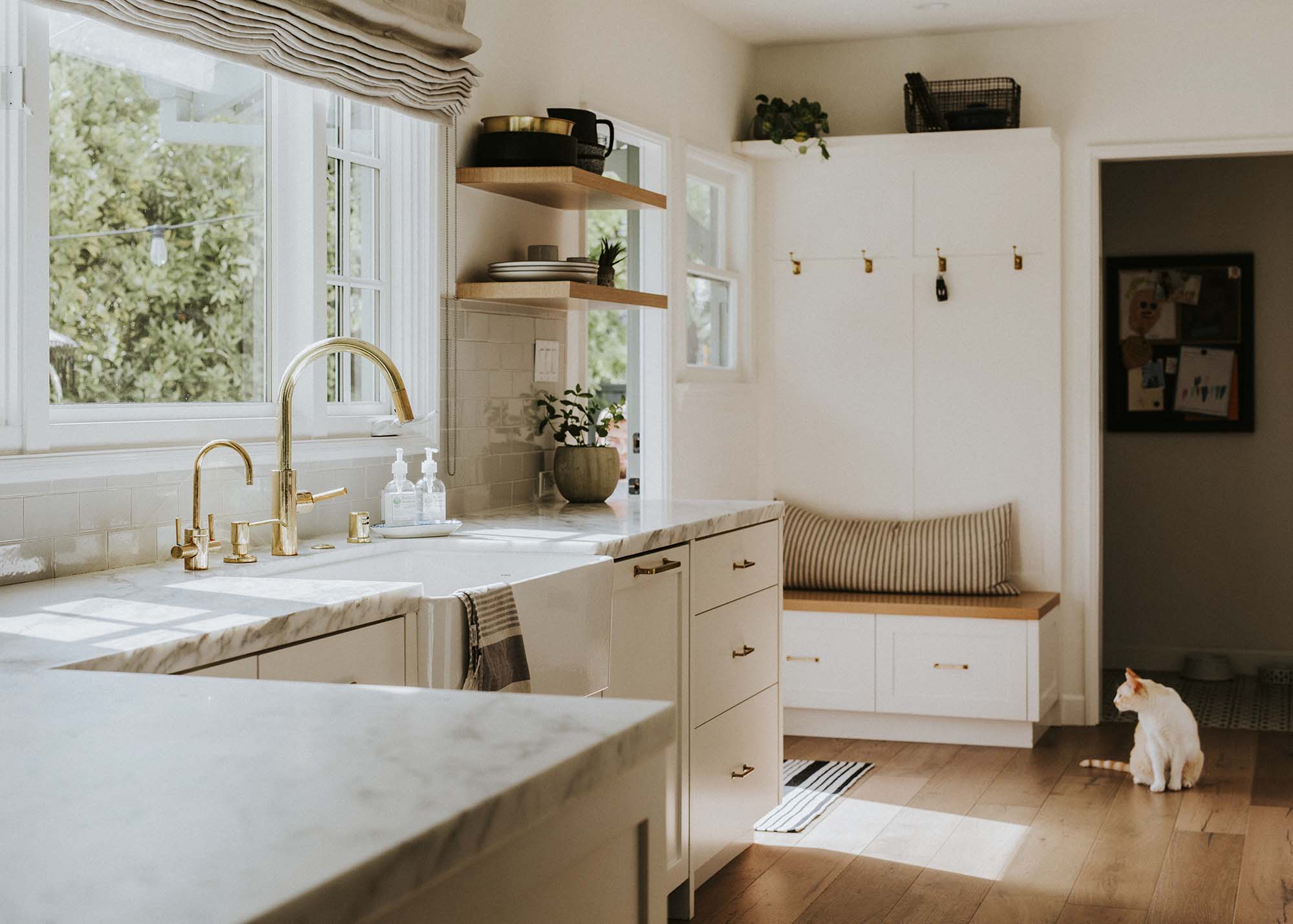
Edge profile is one of the last decisions homeowners make during a countertop project, and it is often treated as an afterthought once the slab material has been chosen. That is a mistake, because the edge you select changes how the countertop functions every single day, not just how it looks from across the room.
Eased and Bullnose Edges
An eased edge softens the sharp corner of a standard square cut without adding a dramatic curve, which makes it one of the most practical choices for a family kitchen. It reduces chipping at the corners compared to a true square edge while keeping a clean, simple look that works with almost any cabinet style.
A full bullnose takes that softening further with a complete rounded curve across the entire edge, which is a common choice in households with small children since there are no sharp corners at counter height. The rounded profile also tends to show less wear over time, since there is no thin edge to chip or crack under repeated contact.
Ogee and Waterfall Edges
Ogee edges bring a decorative S curve profile that adds a more traditional, formal look to a kitchen, often paired with granite or marble in classic cabinetry styles. The added detail does increase fabrication cost and time compared to a simple eased edge, since the profile requires more precise shaping along the entire perimeter of the slab.
A waterfall edge takes a different approach entirely, extending the countertop material down the side of an island or cabinet run instead of finishing at a horizontal edge. This creates a strong visual statement in modern kitchens and works particularly well with quartz, since the consistent pattern continues seamlessly from the countertop down the vertical face.
How Edge Profile Affects Cleaning and Maintenance
Edges with more detail, like ogee or bullnose profiles, create more surface area and more grooves where crumbs, grease, and liquid can collect compared to a flat eased edge. That does not make them impractical, but it does mean a slightly more deliberate wipe down routine to keep the detail looking sharp rather than grimy.
Flatter profiles like a simple eased edge or a square edge with a light chamfer are the easiest to keep clean, since a single pass with a cloth clears the entire surface without navigating curves or ridges. For kitchens that see heavy daily use, that simplicity often outweighs the visual appeal of a more elaborate edge detail.
Matching Edge Profile to Your Kitchen Style
A traditional kitchen with raised panel cabinetry and ornate hardware generally pairs well with an ogee or bullnose edge, since the added detail complements the existing style rather than competing with it. A modern or transitional kitchen with flat panel or shaker style cabinets tends to look cleaner with a simple eased or square edge, letting the cabinetry and countertop material carry the visual weight instead.
Islands often present an opportunity to break from the rest of the kitchen, with a waterfall edge on the island contrasting against a simpler eased edge on the perimeter counters. Bringing a photo of your cabinet style and a sample of your chosen countertop material to a design consultation makes it much easier to settle on an edge profile that ties the whole room together.
Choosing the right edge profile is easier with slabs and cabinet samples in front of you. Heartland Cabinetry & More can walk you through edge options in person and help you see how each one looks with your chosen material and cabinetry. We serve homeowners across Bourbonnais, Kankakee, Manteno, Watseka, Bradley, and the surrounding areas and welcome you to explore samples at Bourbonnais, IL. View our Custom Countertops offerings or contact us to book your design consultation.