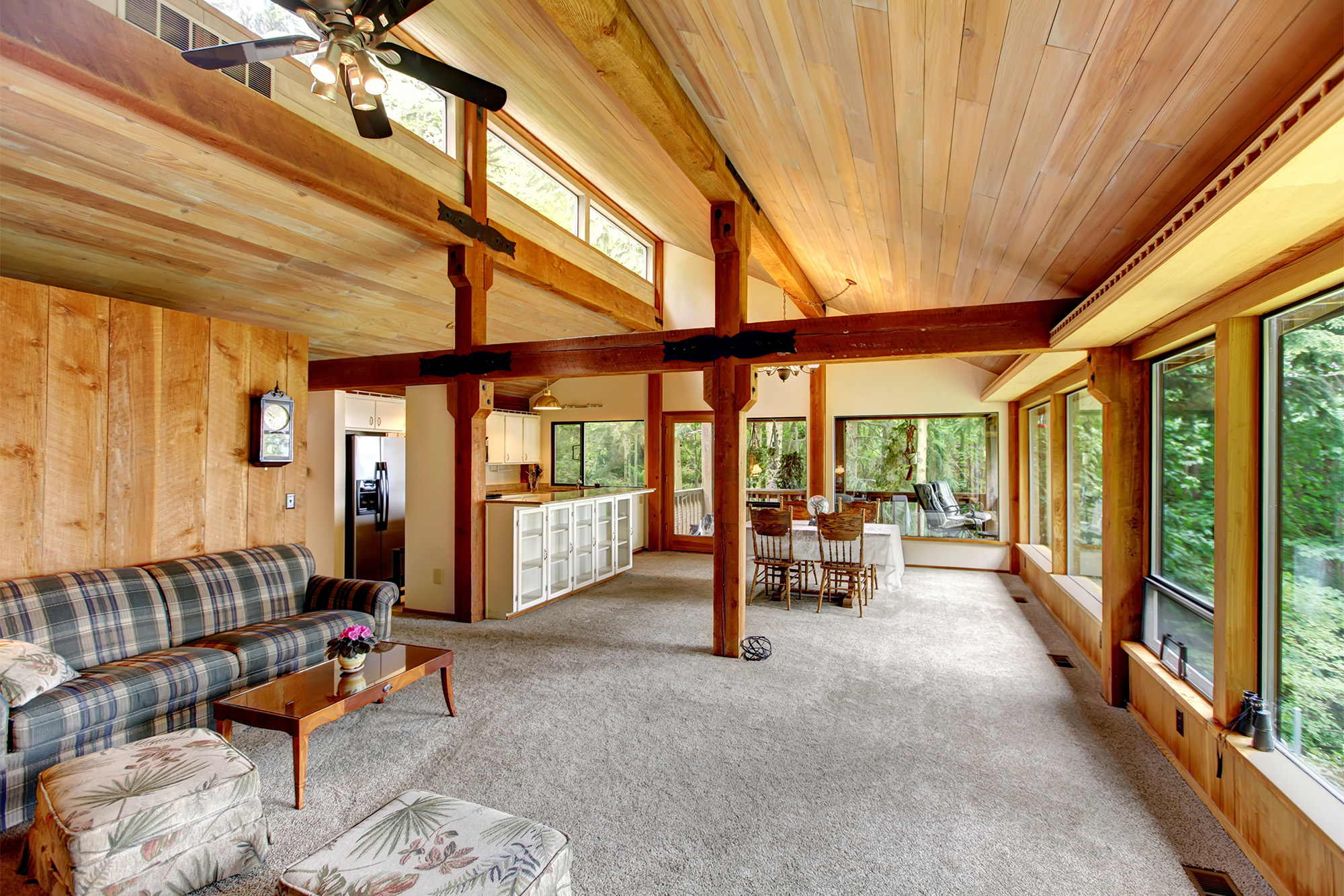
Waterproof flooring is one of the most misunderstood categories in home improvement. Homeowners hear “waterproof” and assume the whole floor system is protected from anything. In reality, the plank may resist water, but the installation still depends on substrate condition, flatness, expansion space, moisture control, and transition planning. That is where many failures start.
Waterproof product does not mean waterproof assembly
Luxury vinyl plank and other waterproof flooring products are designed so the material itself does not swell like traditional wood-based flooring. That is helpful, but it does not make the entire installation immune to damage. Water can still move through seams, sit underneath the floor, affect adhesives where applicable, or create odor and mold concerns below the surface.
In Bourbonnais and Kankakee area homes, the usual trouble spots are not dramatic floods. They are slower, quieter problems: damp subfloors, appliance drips, entry moisture, seasonal humidity, and improper floor prep.
Failure point #1: The subfloor was never flat enough
One of the most common reasons waterproof flooring fails early is subfloor deflection caused by unevenness. A floor can look “pretty level” to the eye and still be outside the manufacturer’s tolerance. Most floating floors require the substrate to be flat within a very specific range over a set distance. If it is not, the locking system takes extra stress.
That stress can lead to:
end-joint separation
edge lift
hollow spots
clicking sounds underfoot
premature wear on locking edges
This matters even more with longer and wider planks. Large-format boards look beautiful, but they are less forgiving when the floor underneath has dips, ridges, or patchy repairs.
Failure point #2: Moisture testing was skipped
Even on a concrete slab, waterproof flooring does not eliminate the need for moisture evaluation. Concrete can hold and transmit vapor long after it feels dry to the touch. If moisture conditions are not checked, the floor may trap vapor underneath, leading to odor, adhesive issues in glue-down systems, or long-term substrate concerns.
In this region, lower-level spaces, slab-on-grade homes, and entry areas deserve extra attention. Moisture-related failure usually starts invisibly. By the time the homeowner notices a smell, soft trim, or repeated plank movement, the issue has often been building for months.
Failure point #3: Expansion space was treated like a suggestion
Floating floors move. That movement is normal. Temperature changes, sunlight exposure, and indoor humidity all affect the floor system. If the perimeter expansion gap is too tight, the floor has nowhere to go.
The result can be:
tenting in the middle of the room
pressure at doorway transitions
buckling near kitchen runs
stress around islands, cabinets, and trim
This gets worse when installers wedge planks tightly to walls or bury the floor under heavy fixed elements without planning. Waterproof flooring still needs movement accommodation. Ignore that, and the failure may show up right where the room receives the most traffic.
Failure point #4: Kitchens, laundry areas, and entries were underplanned
The first real-world failure zones are usually predictable. Kitchens deal with dishwasher leaks, dropped ice, sink splash, and chair movement. Laundry areas face vibration, hose risk, and point loads. Entries bring in water, grit, and winter residue.
If these areas are not detailed correctly, even a good flooring product can struggle. The installation has to account for transitions, appliance clearance, trim sealing strategy, and traffic patterns. In many homes, the floor itself is not the weak link. The weak link is how the difficult edges and wet-adjacent zones were handled.
Failure point #5: Floor height and transitions were treated as an afterthought
A flooring installation can fail operationally before it fails structurally. Awkward height changes between rooms, poor transition strips, and pinched door clearances all create daily frustration. They also put stress on plank edges.
Transition planning should consider:
adjacent room heights
appliance fit under counters
swing clearance at doors
stair nosing details
clean movement joints between spaces
A technically correct install is not just about the center of the room. It is about how the flooring behaves at the perimeter, at openings, and where one material meets another.
What good waterproof flooring installation actually looks like
A durable installation starts before the first plank is opened. The best results come from a process that includes substrate inspection, flatness correction, moisture awareness, layout planning, and careful transition detailing.
A sound installation usually includes:
verifying subfloor condition and flatness
addressing dips, humps, and weak spots before installation
evaluating concrete or below-grade moisture conditions
preserving required expansion gaps
selecting the right underlayment or installation system
planning thresholds, edges, and appliance zones properly
That kind of preparation is what separates a floor that looks good on day one from one that still performs years later.
Why this matters for buyers comparing quotes
Low quotes often skip the invisible work. The product may look comparable on paper, but the preparation scope is where projects separate. If one proposal does not mention floor prep, moisture considerations, or transition detailing, that is a red flag.
Waterproof flooring is a strong option for busy households. It is practical, durable, and visually versatile. But the long-term result depends on installation discipline, not just product labeling.
Heartland Cabinetry & More is based at 920 N Convent St., Bourbonnais, IL 60914-1338, with a showroom where homeowners can compare flooring options and discuss project details in person. The company serves Bourbonnais, Kankakee, Manteno, and Watseka, with design support and professional installation available.
If you are comparing waterproof flooring options and want the installation side handled correctly from the start, contact us to schedule a visit or request your free in-home measure and estimate.